Likes
Editor's Note: The results of the fifth SCNU English Writing and Short Video Contest have been announced on the website of the Office of International Exchange & Cooperation of SCNU (see results). We congratulate all prize winners on their outstanding performance. Winning entries will be published in this column.
-------
By Nie Donglian
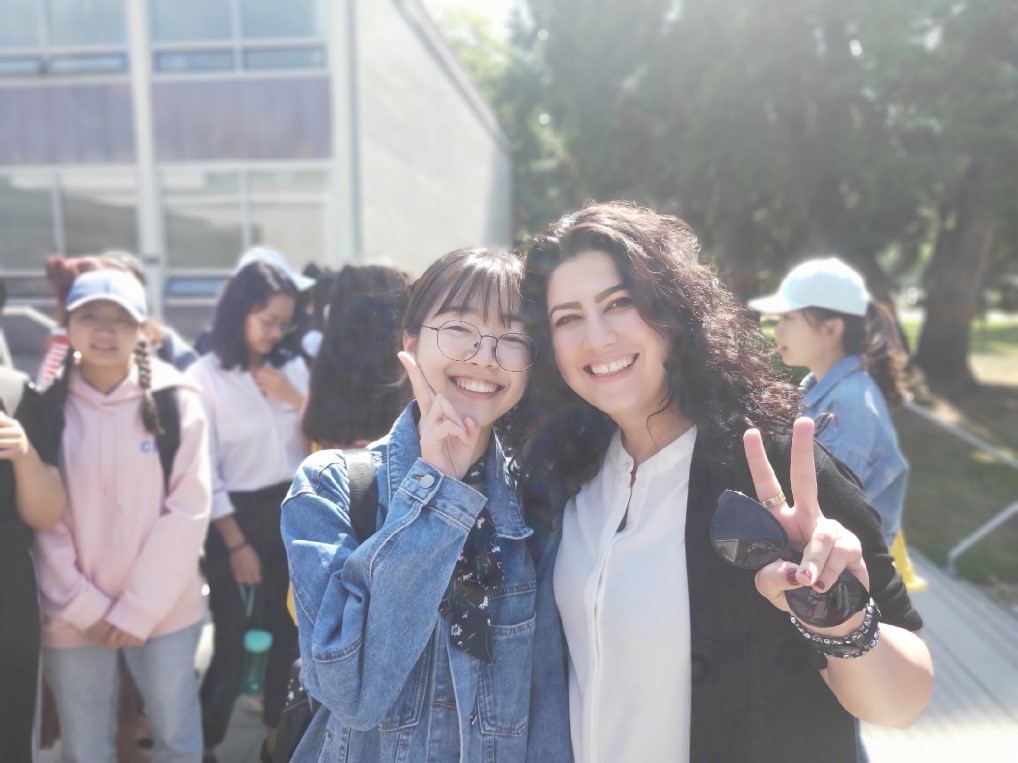
In the heart of South China Normal University, a 91-year-old school, where the whispers of ancient wisdom meet the pulse of modern academia, stands Ali Haghighi, a foreign professor, whose teachings gracefully span the cultural divides between South China Normal University and the world, acting as a vital bridge for mutual understanding and knowledge exchange.
Born in America and raised in Canada, Ali, however, has made his four-year journey at South China Normal University as a global educator with a double major in education and geology in Australia. Ali was drawn to China by its rich traditional culture and good opportunities. His decision to join South China Normal University was fueled by its reputation for academic excellence and its welcoming environment for international educators. “Language barrier was a big challenge,” Ali said, “but I have learned Mandarin and now I can speak some simple Chinese.” At first, everything seemed strange, Ali added, “My colleagues are so helpful that I have never been in trouble so far. And the students here are really bright, enthusiastic and passionate, so I love the school.”
As a global educator, Ali tries to combine Chinese culture and western style. His embrace of Chinese culture and his efforts to integrate it with Western teachings are showed in his cross-cultural class. In his classroom, Ali orchestrates a symphony of ideas, where the rich harmonies of Chinese thought intertwine with the dynamic rhythms of Western philosophy, creating a chorus of global perspectives. Thus, Ali’s pedagogy effectively bridges the East and West, fostering a harmonious blend of cultures and philosophies.
Ali’s approach to teaching is a blend of traditional and innovative methods. He fosters an academic environment where the reserved eloquence of Eastern students meets the inquisitive spirit of Western pedagogy. He emphasizes the importance of critical thinking and encourages students to engage in English learning from a global perspective. He encourages his students to question, to explore, and to engage in a dialogue that builds mutual understanding and respect. Ali’s scholarly work serves as a bridge, connecting the intellectual traditions of the East with the critical analysis of the West.
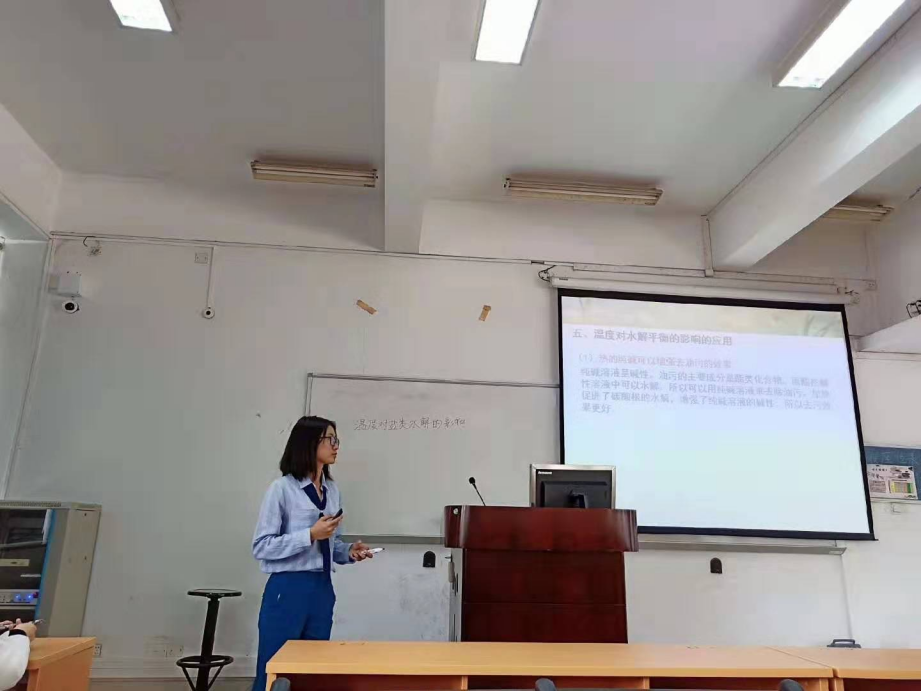
Ali’s classes are not just about language acquisition, and they are a gateway to different cultures and views. Ali often incorporates multimedia and interactive activities to make learning English a dynamic and enjoyable experience. “Ali's classes are never boring,” says Christina, a postgraduate student in Ali’s class, “He brings in diverse cultures, videos, debate and other activities to help us improve our speaking skills and understand different cultures. It’s amazing how much we can learn beyond the textbook.” “It’s true,” Alice agrees with Christina, “Ali’s class is enjoyable. I am Alice, and his class is a wonderland for me. I want to explore more outside of the classroom.” When asked how Ali made it, Ali said, “I hope every student can be more confident about themselves, and this is the meaning of education. It is the most important part.” In a sense, he constructs an invisible bridge between students and a better self.
Reflecting on his journey, Ali found that not everything was going smoothly. “The most challenging part of my teaching was that sometimes students were not active.” Ali said, “They would keep silent and got distracted.” But soon Ali learned the key was to be friends with them and make them feel comfortable in the class, which could help them gain knowledge in a much more relaxing way. It was quite different from traditional Chinese teaching method. What’s more, Ali paid attention to interacting with his students. As time went by, almost all students took an active part in his class. And even some students invited him to have dinner. In a way, Ali himself acts as bridge to connect the teachers and the students on this traditional campus.
Looking towards the future of South China Normal University, Ali sees endless possibilities for growth and collaboration, “I think we can develop our teaching methods, as the teaching methods here are strictly structured. The ways in western countries are more relaxing. I think we can have the both sides and the Chinese education will be more flexible to make the class more intriguing.” Ali’s narrative at South China Normal University is a testament to the power of education to bridge divides and foster a global community where the unique voices of China and the world can be heard and celebrated. And his journey at South China Normal University continues to resonate deeply, inspiring both students and faculty to construct more bridges to knowledge, understanding, and global collaboration, shaping a future where cultural exchange and educational innovation go hand in hand.
What to read next: