Likes
Seventy-five scholars of South China Normal University have been named in the World's Top 2% Scientists 2025 list published by Stanford University and Elsevier recently. 21 have been selected on both the "career-long impact" list and "single year impact" list.
The 30 SCNU scholars (see table 1) selected for the list of "career-long impact" work in nine fields, involving earth & environmental sciences, physics & astronomy, mathematics & statistics, enabling & strategic technologies, chemistry, phychology & cognitive sciences, biology, information & communication technologies and clinical medicine. They are mainly from the School of Chemistry (8 scholars), the School of Information and Optoelectronic Science and Engineering (7 scholars), and the School of Environment (4 scholars).
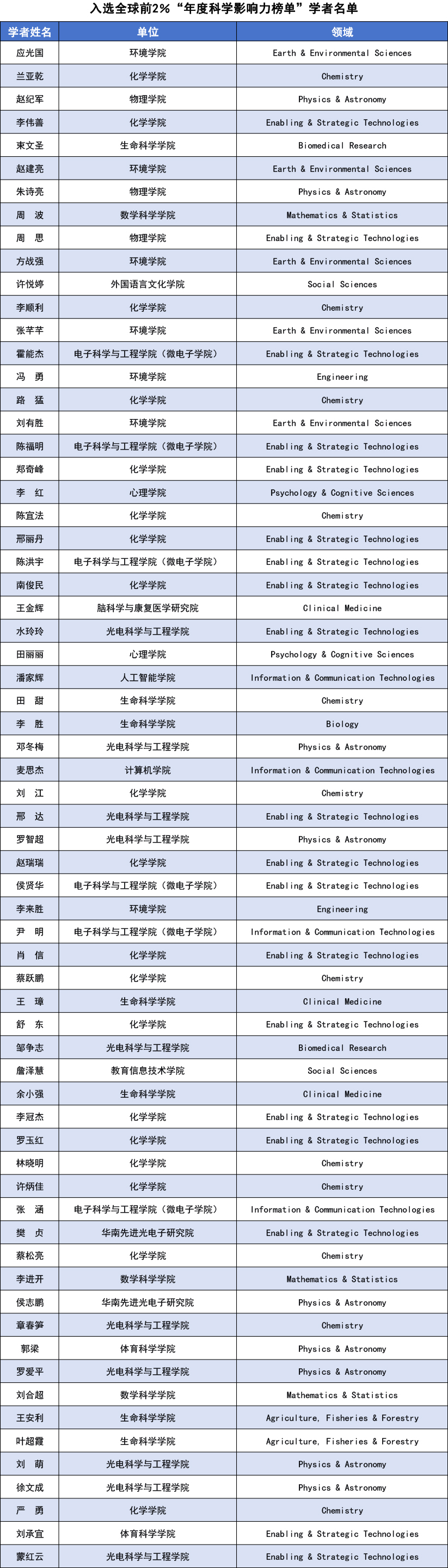
Sixty-eight scholars (see table 2) have been selected for the list of "single year impact" from 18 schools at SCNU involving 13 fields. The School of Chemistry saw the greatest number of scholars on the list with 19 scholars, followed by the School of Information and Optoelectronic Science and Engineering with 11 scholars; Seven come from the School of Environment and the School of Life Sciences respectively, six from the School of Electronics and Information Engineering.
As is reported, a total of 12,374 Chinese scholars have been selected for the "lifetime scientific impact ranking" and 31,685 Chinese scholars were selected for the "2025 single year impact ranking".
Based on the Scopus database, the top 2% of the world’s scientists are chosen from nearly seven million scientists by citations made, the H-index, the HM-index and other comprehensive indicators in 22 fields and 174 sub-fields. The list provides metrics geared towards the long-term scientific performance of scientists, reflecting their academic impact.
Table 1: SCNU scholars on the top 2% of the world's "career-long impact" list ▼
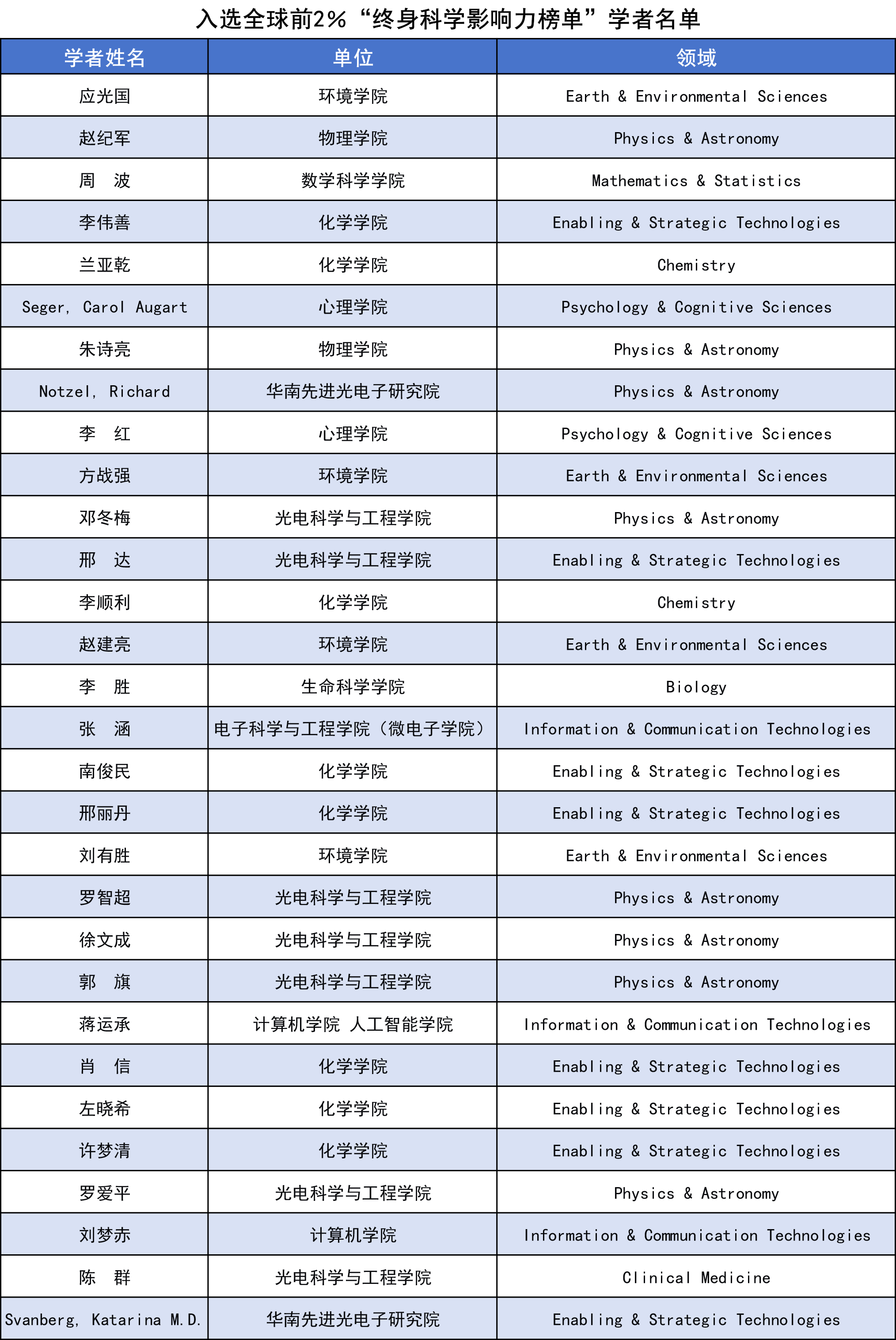
Table 2: SCNU scholars on the top 2% of the world's "single year impact" list.
Source from SCNU News Center
Translated by Li Shiyao
Proofread by Edwin Baak
Edited by Li Jianru
What to read next: